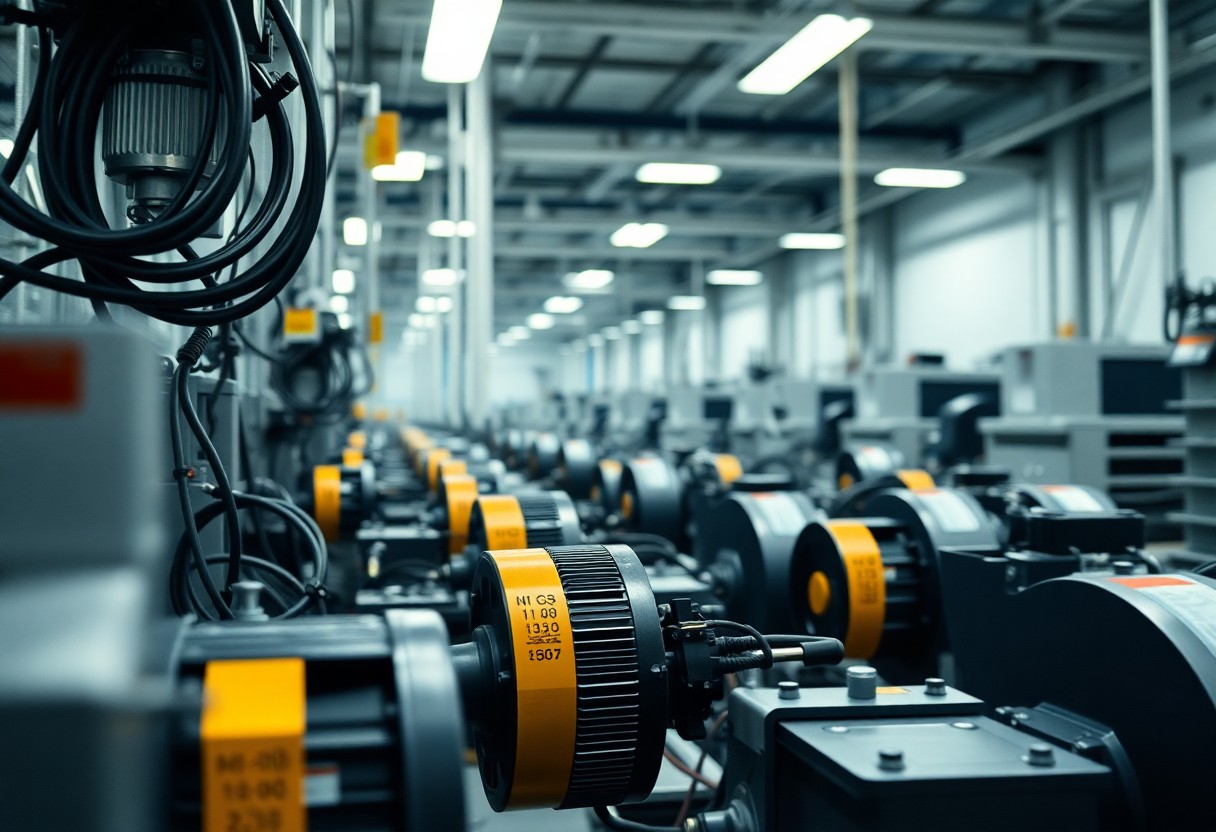
Electromotors are integral to modern machinery, offering you enhanced efficiency and reliability. By integrating these devices, you can significantly reduce maintenance costs and improve performance. Their compact design allows for flexibility in various applications, making them ideal for both consumer and industrial uses. Additionally, electromotors operate with lower emissions, supporting your commitment to a more sustainable environment. Understanding their benefits can help you make informed decisions that enhance your operations and drive success.
Types of Electromotors
Electromotors are classified mainly into two categories: DC motors and AC motors, each serving unique purposes across various applications. Understanding these types enables you to select the right motor for your specific needs, optimizing performance and efficiency. Below is a detailed comparison highlighting key characteristics of each type:
| Type | Characteristics |
| DC Motors | Powered by direct current, offering precise speed control. |
| AC Motors | Driven by alternating current, often used in industrial applications. |
| Speed Control | DC motors excel in high torque at low speeds. |
| Maintenance | DC motors require more upkeep due to brushes. |
| Cost | Typically, AC motors are more cost-effective for large-scale operations. |
DC Motors
A DC motor utilizes direct current to produce motion, making it ideal for applications requiring variable speed and torque. You benefit from its high starting torque characteristics, permitting heavy loads to be moved effectively. These motors are commonly utilized in robotics and electric vehicles, where precision in speed is important. Moreover, the ease of speed regulation enables you to adjust the motor’s output according to demand quickly.
However, due to the presence of brushes in DC motors, maintenance can become a significant factor over time. The brushes and commutators may wear out, necessitating regular checks and replacements. Various designs, such as brushed and brushless DC motors, offer distinct advantages depending on your specific application; brushless models, for instance, eliminate the need for physical maintenance, enhancing reliability.
AC Motors
In contrast, AC motors operate on alternating current, making them universally applicable in industrial settings. Their robust design helps you achieve high efficiency in continuous operation, and they thrive in environments where high power output is required. These motors come in diverse types, including synchronous and asynchronous (induction) motors, each catering to different operational needs. For example, asynchronous motors are widely favored in manufacturing due to their durability and low maintenance costs.
The versatility of AC motors allows for applications ranging from small appliances to large industrial machinery. Importantly, their construction facilitates easy integration into power supply systems, offering you a seamless transition in workflows. Assume that you choose an induction motor for your production line; it will operate efficiently at a fraction of the energy cost compared to other motor types, thus positively impacting your bottom line.
Benefits of Electromotors in Machines
Energy Efficiency
Your machinery’s energy consumption can significantly decrease by integrating electromotors. These motors typically achieve efficiencies of up to 95%, meaning that a higher percentage of energy input is converted into usable mechanical energy compared to traditional systems. For example, a typical industrial motor operating at 85% efficiency wastes a considerable amount of energy as heat, increasing operational costs. In contrast, by utilizing high-efficiency electromotors, you can minimize waste and lower your electricity bills, contributing to a more sustainable operation.
Moreover, the precise control offered by electromotors allows for adjustable speed and torque, leading to optimized performance based on your requirements. This adaptability not only enhances the overall productivity of your operations but also ensures that you are using energy only when necessary. The result is a more energy-efficient process that aligns well with modern sustainability goals while reducing your carbon footprint.
Cost-Effectiveness
Integrating electromotors into your machinery often leads to significant long-term savings, making them a cost-effective choice for many applications. While the initial investment may be higher than traditional motors, the operational savings gained through energy efficiency, reduced maintenance needs, and enhanced reliability often outweigh these upfront costs. For instance, you could save an estimated 30% on electricity costs over the lifespan of a motor, illustrating the economic benefits from the onset.
In addition, the longevity of electromotors is notable, with many having lifespans of over 20 years with minimal upkeep requirements. This durability translates into fewer replacements and downtime, allowing you to allocate resources more effectively. By investing in electromotors, you not only enhance your efficiency but also secure financial stability over the life of your equipment.
Focusing on the long-term perspective enhances your return on investment. As you factor in savings from reduced energy consumption and less frequent maintenance, the overall cost of ownership decreases considerably. Such financial advantages make shifting to electromotors a compelling decision for ensuring profitability while maintaining high operational standards.
Tips for Selecting Electromotors
When choosing the right electromotor for your application, several factors come into play to ensure you make an informed decision. You should consider the application suitability, sizing, and power ratings. Understanding these aspects will help you select an electromotor that aligns with your operational requirements and efficiency standards.
- Application Suitability
- Sizing
- Power Ratings
Recognizing how these elements interconnect can significantly enhance performance and longevity, mitigating potential issues down the line.
Application Suitability
Your first step is analyzing the specific application suitability of the electromotor. Different applications may require various types of motors, such as AC, DC, or stepper motors, each providing unique functionalities. For instance, if your machinery demands precision control, a stepper motor may be ideal, while applications requiring constant speed may benefit from an AC motor.
Consider environmental factors as well; if your equipment operates in harsh conditions or areas with potential water exposure, you need a motor with adequate protection ratings. Evaluating the operational environment ensures that you select a motor capable of performing reliably without compromising safety or efficiency.
Sizing and Power Ratings
Effective electromotor selection hinges on correct sizing and evaluating the power ratings. Sizing entails selecting a motor whose power output matches your machine’s demands. You must perform calculations to determine the torque and speed requirements of your application, ensuring that the motor’s specifications align with the load you intend to drive.
Power ratings play an necessary role in this process. For standard applications, using a motor that operates at around 80% to 90% of its rated capacity is advisable. This practice prevents overheating and prolongs the life of the motor. Additionally, understanding the relationship between voltage, current, and power helps in identifying the best motor configuration for your setup.
Ultimately, adhering to these guidelines will help you avoid the pitfalls of under- or over-sizing, ensuring that your electromotor operates at an optimal level for your specific needs. Recognizing the importance of these factors is vital to achieving maximum efficiency and reliability in your applications.
Step-by-Step Installation Process
Installation Steps
| Preparation | Gather necessary tools and materials, ensuring you have the correct specifications for your electromotor. Review the manual for any specific installation requirements related to your model. |
| Wiring and Setup | Carefully connect the wires based on the wiring diagram provided, ensuring proper polarity to avoid short circuits. Use appropriate connectors to secure connections and prevent resistance buildup. |
| Testing the System | Once everything is set up, conduct initial tests to check for functionality. Look for any unusual sounds or vibrations that could indicate installation errors. |
Preparation
Before beginning the installation, you need to ensure that you have all the necessary components and tools at your disposal. Check the specifications of your electromotor to confirm compatibility with the machinery. This includes reviewing the voltage, current requirements, and mounting dimensions to align with your machine’s structure. Safety gear such as gloves and goggles should also be a part of your preparation.
Additionally, create a clean and organized workspace to minimize the risk of accidents. Have a checklist ready to inspect each component before installation. This helps in identifying and rectifying any inconsistencies before you proceed, contributing to a smoother installation process.
Wiring and Setup
The wiring process is vital for the proper operation of your electromotor. You should first consult the electromotor’s wiring diagram to ensure correct connections. This step involves connecting power supply wires to the motor’s terminals, with a focus on ensuring the right polarity to avoid irreversible damage. Engage quality connectors and terminals to enhance connectivity and reduce potential disputes from loose wiring.
After you have securely wired everything, verify that there are no exposed wires or broken connections. Use heat shrink tubing or electrical tape for additional insulation. This precaution not only safeguards your installation but also enhances the overall longevity of the system.
Pay close attention to the specifications concerning torque and load capacity during this setup. If your application demands higher torque, you may need to employ larger gauge wires or implement additional protective circuitry.
Testing the System
Testing is the final step that ensures your electromotor installation is successful. Once the wiring and setup are completed, power on the system cautiously. Monitor the initial operation; look for indicators such as excessive heat or abnormal sounds, which may signify wiring issues or misalignment. Run the system through various operational loads to observe its response and ensure consistent performance throughout.
Re-evaluate your connections if any issues arise during testing, and address them before conducting further assessments. Performing thorough tests can help mitigate future failures and ensure reliable long-term functionality of the electromotor in your application.
Factors Influencing Electromotor Performance
Understanding the specific elements that affect electromotor performance is key to optimizing their use in your machinery. Various factors play critical roles, such as load conditions, temperature, and environmental influences. Recognizing these variables can lead to significant enhancements in efficiency and longevity.
- Load Conditions
- Temperature
- Environment
Load Conditions
Load conditions directly impact the performance of electromotors. When operating under heavy loads, electromotors can experience increased thermal stress, which, if not managed properly, can lead to decreased efficiency and potential failure. Optimizing the load within the recommended specifications enhances performance and extends the lifespan of your motor.
You also need to consider the starting load, as startups require more current. If the motor struggles or is overloaded during this phase, it may suffer from premature wear, resulting in higher operational costs. Thou, maintaining load parameters within tolerable limits is necessary for reliable operation.
Temperature and Environment
The operating environment plays a vital role in electromotor performance. Extreme temperatures can affect the winding insulation and component integrity, leading to a higher risk of malfunction. Ideally, your electromotor should function within a temperature range specified by the manufacturer to ensure optimal operation.
Humidity and dust can also impact performance. High humidity levels might cause moisture ingress, while dust accumulation can lead to thermal buildup. Thou, implementing appropriate safeguards, such as ventilation or environmental enclosures, is advisable to maximize the lifespan of your electromotor.
Temperature and Environment Overview
| Factor | Impact on Performance |
| Temperature | Excess heat can cause insulation breakdown. |
| Humidity | Can lead to corrosion and electrical shorts. |
| Dust accumulation | May restrict airflow, causing overheating. |
Environmental factors have a significant influence on the overall reliability of electromotors. For instance, motors exposed to harsh environments require enhanced protection, such as seals or coatings, to prevent damage from corrosion or particulates. Understanding these nuances can help you select a suitable electromotor that will perform optimally in your specific conditions. Thou, investing in robust designs pays dividends in durability and efficiency.
Pros and Cons of Electromotors
Pros and Cons Overview
| Pros | Cons |
|---|---|
| High efficiency and performance | Initial costs can be high |
| Lower maintenance requirements | Requires a consistent power supply |
| Quiet operation | Limited to lower torque applications |
| Compact and lightweight design | Heat generation under heavy loads |
| Ability to control speed and torque effectively | Reliance on electronic components |
| Environmentally friendly options | Potential for electromagnetic interference |
| Versatile applications | Potential over-reliance on technology |
| Rapid response time in operations | Not suitable for all environments |
| Long lifespan with proper care | Risk of failure in power outage scenarios |
| Reduced vibration compared to mechanical systems | Can be sensitive to temperature variations |
Advantages
You gain multiple benefits by integrating electromotors into your machinery. One of the most significant advantages is high efficiency levels, often exceeding 90%, which translates to lower energy costs. This is particularly crucial for industries where electricity can be a substantial part of operational expenses. Additionally, their compact design means you can fit them into smaller spaces, allowing for innovative machinery configurations that enhance productivity.
Maintenance is another area where electromotors shine. They have fewer moving parts compared to their mechanical counterparts, which reduces wear and tear. As a result, you frequently enjoy decreased downtime and lower maintenance costs. This reliability allows you to maximize your operational efficiency and improve your bottom line, making electromotors a preferred choice for many manufacturers.
Disadvantages
While electromotors come with numerous benefits, it’s important to be aware of their disadvantages. The initial investment can be significantly higher than traditional mechanical systems, which might deter some businesses. Furthermore, electromotors are dependent on a stable electrical supply, making them less reliable in areas prone to power fluctuations or outages.
Another drawback is the heat generation during high-load operations. If not managed effectively, this can lead to reduced motor life and efficiency. In addition, the reliance on electronic components introduces potential vulnerabilities. For example, failures in these components can result in expensive repairs and interruptions in production. The impact of electromagnetic interference in sensitive environments further complicates their application, necessitating careful consideration during implementation.
Conclusion
Ultimately, incorporating electromotors in your machines enhances efficiency, reduces operational costs, and contributes to a more sustainable environment. By leveraging the precision and control that electromotors provide, you can improve the overall performance of your equipment, resulting in longer lifespan and less maintenance. This advancement not only optimizes your workflow but also allows you to stay competitive in an increasingly automated landscape.
In addition, the versatility of electromotors means they can be adapted to various applications, making them suitable for an array of industries. Transitioning to electromotor-driven solutions empowers you to align your operations with modern technology trends while reaping the benefits of superior power-to-weight ratios and quieter operation. Your investment in electromotors will pay dividends, both in productivity and innovation, paving the way for a more efficient future.

Comments are closed