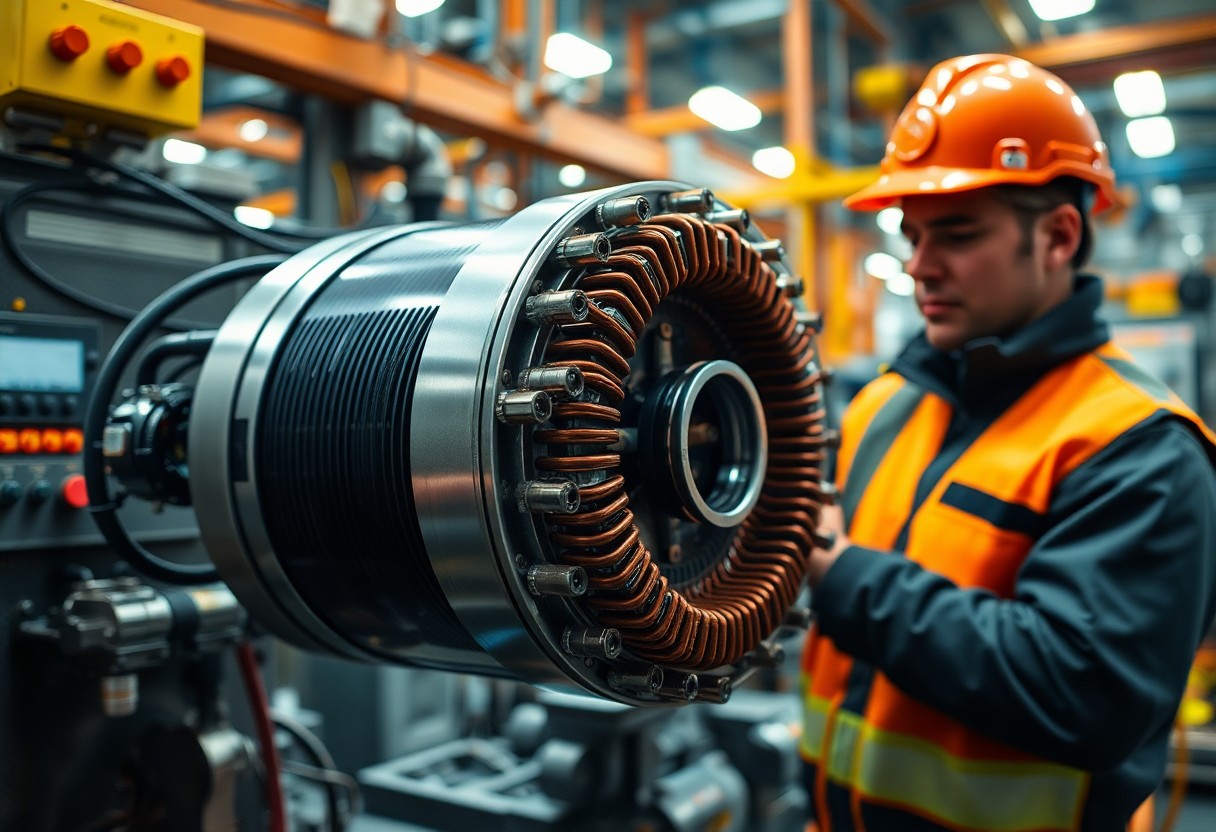
There’s a fascinating world behind the functionality of electromotors in today’s industry. You will discover how these devices convert electrical energy into mechanical power, driving everything from factory machinery to electric vehicles. Understanding the principles of electromagnetism and efficiency can not only enhance your appreciation of modern technology but also showcase the potential hazards and benefits associated with their use. This guide will equip you with the knowledge needed to navigate the complexities of electromotor applications in your field.
Types of Electromotors
You will find various types of electromotors tailored for different industrial applications. Each type serves specific needs and comes with distinct advantages. Common types include:
- AC Motors
- DC Motors
- Stepper Motors
- Servo Motors
- Brushless Motors
This classification reflects the diversity in design and functionality, allowing industries to select motors that align with their operational demands. Assume that understanding these types will clarify which motor is best suited for your particular application.
| Type | Key Features |
|---|---|
| AC Motors | Efficient for high power applications |
| DC Motors | Excellent for variable speed control |
| Stepper Motors | Precise position control capabilities |
| Servo Motors | High torque at high speeds |
| Brushless Motors | Reduced maintenance requirements |
AC Motors
AC motors are predominant in industrial environments due to their reliability and efficiency in high-power applications. They operate on alternating current, which allows them to be highly efficient, especially in applications requiring constant speed. The two primary types of AC motors are synchronous and induction motors. Induction motors, in particular, are widely used because they do not require brushes or commutators, significantly reducing maintenance needs.
In practical uses, you’ll see AC motors powering everything from conveyor systems to large industrial fans. They excel in applications where the speed can remain consistent, making them ideal for heavy machinery that demands uninterrupted performance. This reliability can translate to lower downtime and increased productivity in your operations.
DC Motors
DC motors are renowned for their exceptional speed control and startup torque, making them suitable for applications that require precise motion. They function on direct current and typically consist of brushes and a commutator, which allows for smooth operation through adjustable voltage levels. In industries, your choice of a DC motor might depend on the need for flexibility and precision in speed variations, such as in electric vehicles or robotics.
One of the significant advantages of DC motors is their ability to rapidly change speed and direction, ideal for applications like conveyor belts and automated assembly lines. Because DC motors can deliver high torque over a wide speed range, they are often the preferred choice in environments where operational demands fluctuate frequently.
Notably, the advancements in technology have led to developments such as brushless DC motors, which eliminate the need for brushes, resulting in greater efficiency and reduced wear. This innovation enhances the service life of the motor and lowers maintenance costs, addressing some common drawbacks associated with traditional brushed DC motors.
Factors Affecting Electromotor Performance
The performance of an electromechanical motor is influenced by a variety of factors that can either enhance or diminish its efficiency. Understanding these factors is imperative for optimizing your systems. Key aspects include:
- Load Requirements
- Environmental Conditions
- Cooling Systems
- Supply Voltage
- Maintenance Practices
Knowing these elements will allow you to make informed decisions regarding motor selection and operational strategies to achieve optimal performance.
Load Requirements
Your electromotor’s performance is significantly impacted by the load it must handle. This includes the magnitude of the load, the type of load (constant or variable), and how these demands change over time. If your motor is consistently overloaded, it will experience excessive heat and wear, leading to a decrease in both efficiency and lifespan. Selecting a motor rated for higher torque and power output can help accommodate fluctuating loads and prolong operational reliability.
Moreover, variable loads require motors with good speed regulation. If your application functions with intermittent loads, consider utilizing a motor coupled with a suitable drive system that can adjust performance in real-time, thus ensuring you maximize efficiency while mitigating potential damage.
Environmental Conditions
Environmental conditions play a pivotal role in the lifespan and performance of your electromotors. Factors such as temperature, humidity, dust, and chemical exposure can significantly impact motor reliability. For instance, motors operating in high heat environments without proper ventilation risk thermal overload, which can lead to failure. Similarly, high humidity levels may cause insulation failures or corrosion, compromising motor integrity. In industrial settings, motors should ideally be rated for IP protection to safeguard against dust and moisture ingress.
An often overlooked but imperative aspect is the installation environment. If your operational area includes vibratory equipment or fluctuating temperatures, having motors designed for high endurance and equipped with robust enclosures is crucial. Additionally, consider regular assessments of these environmental influences to proactively address potential issues, maintaining uninterrupted operations. Knowing these environmental factors will empower you to choose the right motor and ensure efficient, long-term performance.
Step-by-Step Guide to Selecting the Right Electromotor
Assessing Application Needs
Before exploring into the specifications, it’s imperative to evaluate your application needs. Consider the specific tasks your motor will perform, such as lifting, rotating, or driving machinery. You should assess the required torque, whether it needs to run continuously or intermittently, and any operational conditions, such as exposure to moisture or extreme temperatures. Identifying these parameters will directly influence the type of electromotor best suited for your situation.
Also, think about the environmental factors and space limitations. For instance, if the motor is to be used in a confined area, a compact design might be necessary. Conversely, if the application involves significant exposure to contaminants, selecting a motor with protective features would be beneficial. This assessment will lay the groundwork for more precise decisions down the line.
Evaluating Motor Specifications
Once you have a clear understanding of your application needs, it’s time to investigate into the specifics of potential motors. Begin by examining key specifications, such as power rating (measured in horsepower or kilowatts), voltage, and current type (AC or DC). Each specification can dramatically affect performance; for example, a 5 HP motor may suit a different application than a 10 HP motor, despite both being rated for similar environments.
Another vital aspect is the efficiency rating. High-efficiency motors can save you money on energy consumption over time, a factor critical in continuous-use applications. Furthermore, consider any control mechanisms that might be needed, such as variable frequency drives (VFDs), which can enhance versatility in operations. Each of these elements contributes to ensuring that the motor aligns with your operational goals and conditions.
Take, for example, a conveyor system that requires precise speed control. In this case, an adjustable-speed motor could be preferable, one that offers both high torque and efficiency for optimal performance. Ensure that the selected motor matches the specifications necessary for your application and aligns with your energy conservation goals.
Tips for Optimizing Electromotor Efficiency
To maximize the performance of your electromotor, focus on several key areas. Effective steps include reducing friction, ensuring appropriate voltage supply, and maintaining environmental conditions. Properly sizing your electromotor for the load can prevent unnecessary energy loss, and using high-quality components can enhance overall efficiency. Consider implementing advanced controls that can dynamically adjust operational parameters, thus ensuring optimal energy use.
- Regular Monitoring
- Load Management
- Enhanced Cooling
- Quality Components
The implementation of these tips will not only enhance the lifespan of your electromotor but also contribute to significant energy savings.
Regular Maintenance Practices
Implementing a routine inspection schedule is vital for sustaining electomotor efficiency. Regular lubrication of moving parts reduces friction and heat production, which can ultimately lead to motor failure if neglected. Depending on the environment, filters may need cleaning or replacing to ensure that dirt and debris do not impede airflow or cause overheating. Keeping an eye on vibration patterns with the use of monitoring equipment can also aid in early detection of potential issues.
Moreover, routine checks on electrical connections play an imperative role in maintaining optimal performance. Loose or corroded connections can generate excessive heat and lead to inefficiencies. Taking the time to examine these connections, along with verifying that all system settings align with manufacturer recommendations, will help maintain operational integrity and efficiency over time.
Best Practices for Installation
The installation of your electromotor is a defining factor for its efficiency. When positioning the motor, ensure that it’s aligned properly with the load to minimize misalignment, which can lead to increased wear and energy loss. Utilize mounting brackets and vibration-dampening pads to absorb vibrations and stabilize the motor. Proper grounding is also imperative to avoid electrical noise, which can interfere with its operation.
Additionally, you should consider the environmental conditions of the installation site. If the motor is located in a high-temperature area or one with excessive dust, implementing a housing or cooling solution will help maintain optimal performance. If your motor operates at high voltages, ensure that all wiring meets related standards to prevent electrical hazards. The careful attention to these installation details will set the stage for long-term motor efficiency and reliability.
Pros and Cons of Different Electromotor Types
| Type | Pros and Cons |
|---|---|
| AC Motors | High efficiency, low maintenance |
| DC Motors | Simple speed control, high starting torque |
| Stepper Motors | Precise control, easy to operate in open-loop systems |
| Brushless Motors | Long lifespan, high reliability |
| Induction Motors | Durable, can handle varying loads |
Advantages of AC Motors
Your use of AC motors can lead to significant advantages in various industrial applications. For starters, they typically offer greater energy efficiency compared to their DC counterparts. This efficiency translates into lower operating costs over time, which is beneficial for energy-intensive operations. AC motors also generally require less maintenance, as they do not have brushes that wear out over time, minimizing downtime and maintenance expenditures.
In addition, AC motors are known for their ability to operate at higher speeds and power levels without sacrificing performance. This makes them suitable for a wide range of tasks, from powering large machinery to driving industrial fans. With a variety of configurations such as synchronous and induction types, AC motors can be tailored to fit many specific operational conditions, enhancing adaptability across industrial processes.
Limitations of DC Motors
While DC motors offer distinct advantages like higher torque at startup and simpler speed control, they also present notable limitations. For instance, the presence of brushes can lead to higher wear rates, resulting in more frequent maintenance and potential downtime. These maintenance requirements can detract from the overall efficiency, particularly in applications that demand extended operational periods without interruption.
Another limitation is the need for additional circuitry to convert AC to DC for certain industrial environments. This complexity can lead to increased costs and can make systems less straightforward to operate. Additionally, the operational life of a DC motor can be limited due to brush wear, which may not be suitable for applications requiring long-term reliability without frequent servicing.
Overall, the continuous maintenance requirements and potential for reduced lifespan due to brush wear can make DC motors less appealing in some industrial settings. You must weigh these factors against the benefits they provide to determine if they align with your operational needs.
Trends in Electromotor Technology
Innovations in Design
Current advancements in electromotor design are centered around achieving higher efficiency and reducing overall size without sacrificing performance. Engineers are utilizing advanced materials, such as carbon nanotubes and lightweight composites, which enhance thermal performance and usability in extreme conditions. For instance, the use of 3D printing technology allows for the rapid prototyping of motor components, leading to more innovative designs that optimize airflow and reduce energy losses. These innovations not only boost motor efficiency but also allow for greater customization to meet specific industry needs.
Additionally, the integration of smart technology into electromotors is becoming increasingly prevalent. Motors equipped with IoT capabilities can provide real-time data on performance, allowing for predictive maintenance and reduced downtime. An example of this trend is seen with Siemens’ Synamic motors, which use sensor data to adjust performance dynamically, enhancing both efficiency and lifespan. As these technologies advance, you can expect a shift towards more intelligent and adaptable motor solutions across various sectors.
Future Industry Applications
The future landscape of electromotor applications is poised for transformation as industries seek to implement more sustainable and efficient practices. In the renewable energy sector, for instance, the demand for electromotors that can efficiently drive wind turbines and solar tracking systems is steadily increasing. You’ll discover that electric vehicles (EVs) are also driving innovations, with manufacturers focusing on lightweight and compact motors that enhance battery performance and extend vehicle range. Furthermore, automation and robotics in manufacturing are creating demand for high-precision motors that can optimize precision and reliability in production lines.
In healthcare, electromotors are being utilized in surgical robots and advanced medical devices, where precision and reliability are paramount. In logistics, automated guided vehicles (AGVs) using advanced electromotors can navigate facilities with unparalleled efficiency, dramatically reducing operational costs. As industries embrace electrification and automation, you can expect electromotor technology to be at the forefront of these advancements, driving further efficiencies and innovations.
Summing up
To wrap up, understanding how electromotors function in modern industry equips you with the knowledge to appreciate their necessary role in powering machinery and facilitating automation. These devices operate on the principles of electromagnetism, converting electrical energy into mechanical energy, which drives your systems and processes efficiently. By harnessing this technology, industries can achieve enhanced productivity and reliability in their operations.
Moreover, as you continue to explore advancements in electromotor technology, you’ll find innovations that improve energy efficiency and performance. Embracing these developments not only optimizes your operational capabilities but also aligns with sustainable practices, contributing to a greener future. Your awareness of these systems allows you to make informed decisions about integrating electromotors into your industrial applications.

Comments are closed