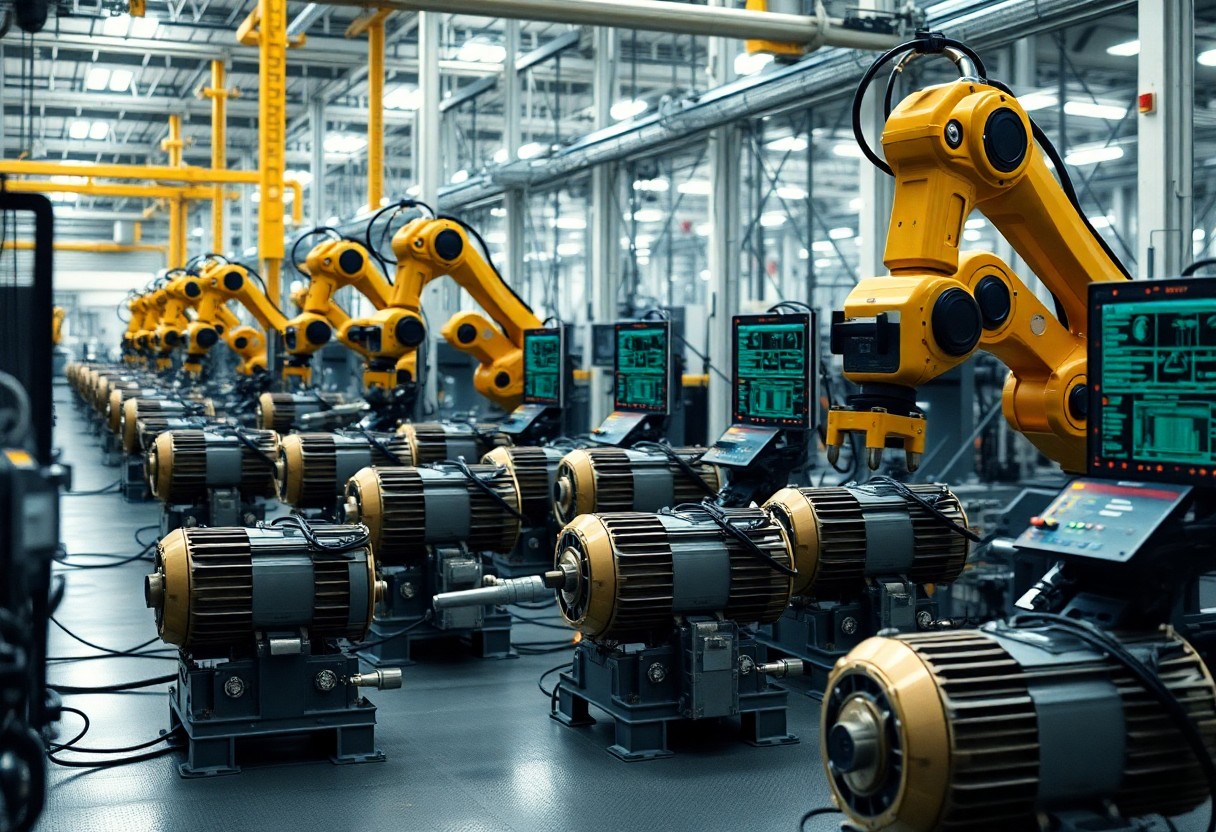
This guide will help you understand how electromotors play a vital role in enhancing the efficiency and flexibility of smart manufacturing. By integrating advanced electromotor technologies into your production processes, you can achieve greater precision, reduce energy consumption, and improve overall operational performance. You’ll discover the benefits of real-time monitoring and automation, allowing you to adapt quickly to changing market demands while minimizing risks associated with traditional manufacturing methods. Embrace the power of electromotors to elevate your manufacturing capabilities to the next level.
Types of Electromotors
Electromotors are integral to the operations in smart manufacturing, with two primary categories dominating the landscape: AC Motors and DC Motors. Both types serve distinct roles and offer specific advantages that can greatly affect the efficiency of manufacturing processes. Familiarizing yourself with these variations can enhance your ability to choose the appropriate motor for your specific applications.
| Motor Type | Key Features |
|---|---|
| AC Motors | High efficiency, low maintenance, and excellent speed control |
| DC Motors | Simple speed control, high torque at low speeds, and better adaptability |
| Synchronous Motors | Constant speed regardless of load and high precision |
| Induction Motors | Rugged design and economical operation |
| Stepper Motors | Accurate positioning and simplicity in control |
AC Motors
You may find AC Motors particularly advantageous in industrial settings due to their ability to operate efficiently at various speeds. They’re designed to convert electrical energy into mechanical energy, making them imperative for applications requiring consistent and stable operation. The design allows for a broader power range, which means you can effectively implement them in systems that require high torque or speed control without sacrificing performance. Additionally, these motors suffer less wear and tear, translating to lower maintenance costs and increased longevity.
When considering implementation, the flexibility of AC motors allows for easy integration into advanced manufacturing systems. You’ll notice that many robotics applications use AC motors because of their ability to control speed and torque seamlessly. Additionally, variable frequency drives (VFDs) enhance the adaptability of AC motors, allowing for smooth transitions in loads and speeds. Assume that you harness this technology effectively, you can achieve significant enhancements in operational efficiency.
DC Motors
In contrast, DC Motors provide notable advantages in precision control, ideal for applications requiring precise speed adjustments and torque management. They operate on direct current, allowing for an easy adjustment of speed by altering voltage, making them particularly effective in processes where position control is imperative. You can leverage their quick response times in applications ranging from assembly lines to conveyor systems, enhancing overall productivity.
Moreover, the capability of DC motors to deliver high torque at low speeds ensures that they are reliable choices for heavy-duty operations. This includes robotics or applications involving heavy lifting, where precision is as important as power. You may also appreciate the inherent simplicity of their design, which allows for straightforward installation and maintenance compared to their AC counterparts. Assume that you understand the specifics of DC motors, incorporating them into your operations can lead to improved adaptability and responsiveness in your manufacturing processes.
Factors Influencing Electromotor Selection
When selecting an electromotor for your smart manufacturing system, several factors come into play. These include the efficiency of the motor, load requirements, environmental conditions, and compatibility with existing systems. Each factor can significantly impact the performance and longevity of your electrification solutions.
- Efficiency: Higher efficiency means lower operational costs.
- Load Requirements: Proper load matching prevents motor overload.
- Environmental Conditions: Motors must withstand specific environmental factors.
- System Compatibility: Ensure seamless integration with current operations.
Recognizing the significance of these factors helps you make informed decisions that optimize your manufacturing processes.
Efficiency
The efficiency of an electromotor is a key determinant of its suitability for your applications. High-efficiency motors can reduce energy consumption by as much as 10-20%, translating to significant cost savings over time. When opting for an electromotor, you should consider efficiency ratings provided by organizations such as the National Electrical Manufacturers Association (NEMA), which set standards for motor performance. Choosing a motor with a higher efficiency rating not only lowers your energy bills but also contributes to sustainability goals.
In applications involving variable loads, it’s vital to analyze how the motor operates under different conditions. You may find that some motors maintain their efficiency better than others across a range of speeds and loads. This adaptability can enhance overall productivity in your manufacturing setup.
Load Requirements
Your specific load requirements play a fundamental role in selecting the appropriate electromotor. Each motor is designed to handle a specific amount of torque and speed; not matching a motor’s specifications to your load can result in reduced performance or even failure. Therefore, calculating the maximum load, average load, and peak load conditions is indispensable.
Understanding these parameters allows you to select a motor that not only meets your needs but also operates optimally throughout its lifespan. For example, in automation applications requiring varying production speeds, a motor with a good starting torque can ensure that your machinery performs reliably. Additionally, if the load fluctuates significantly, you might consider using a variable frequency drive (VFD) to optimize performance and energy consumption dynamically.
For manufacturers requiring high precision and load adjustments, servo motors may be necessary as they provide superior control over both speed and position. This adaptability enables you to manage intricate processes effectively, while oversized shaft requirements and adequate safety margins become necessary considerations. Properly aligning your motor choice with load demands ensures seamless operations and extends equipment lifespan.
Tips for Optimizing Electromotor Usage
Optimizing the use of electromotors in your manufacturing processes can yield better performance and efficiency. First, consider implementing a planned schedule for regular maintenance. This includes checking for wear and tear, ensuring proper lubrication, and replacing any faulty components promptly. Additionally, using variable frequency drives (VFDs) can enhance energy efficiency, allowing you to adjust the speed and torque of the motors according to your specific requirements. Customizing speed settings not only conserves energy but also extends the life of the motors.
- Implement a regular maintenance schedule.
- Utilize variable frequency drives (VFDs).
- Train staff to recognize warning signs of motor failure.
- Monitor displacements and vibrations closely.
- Consider the integration of IoT for performance tracking.
By focusing on these factors, you can significantly enhance the performance of your electromotors. Recognizing the potential for energy savings and operational improvements will set a firm foundation for your smart manufacturing strategy.
Maintenance Best Practices
Implementing best practices in maintenance can greatly affect the longevity and efficiency of your electromotors. Regular inspections should include checking connections, cleaning the motor housing, and testing insulation resistance. Additionally, keeping a log of all maintenance activities can help you identify patterns or recurrent issues, which is vital for predictive maintenance. Using condition monitoring equipment can provide real-time diagnostics, allowing you to intervene before a minor issue escalates into a significant failure.
Investing in training for your maintenance team equips them with the knowledge to perform thorough examinations and understand when to incorporate external expertise. This proactive approach fosters a culture of responsibility and awareness among your workforce, ensuring that your motors operate at peak efficiency and reliability.
Integration with Smart Systems
Integrating your electromotors with smart systems allows for enhanced communication between machines and analytics platforms, leading to improved decision-making. Utilizing IoT sensors can facilitate real-time data collection regarding motor performance, energy consumption, and operational parameters. This wealth of information can be analyzed to identify inefficiencies, predict maintenance needs, and optimize overall performance.
For instance, consider a manufacturing plant that integrates its electromotors with a centralized monitoring system. This setup not only aggregates data but also allows for remote adjustments, reducing downtime and streamlining operations. Incorporating such technology ensures that you stay one step ahead in maximizing efficiency while minimizing costly disruptions in your production workflow.
Step-by-Step Guide to Implementing Electromotors in Manufacturing
Assessment of Needs
Before you explore implementing electromotors, a thorough assessment of your production requirements is necessary. Start by analyzing the existing processes to identify areas where electromotors can enhance efficiency, such as replacing hydraulic systems or optimizing conveyor belts. Evaluating your current workflows allows you to set clear objectives and performance metrics for your electromotor systems.
Consider your production scale, machinery compatibility, and expected output when determining your specific needs. For instance, if your facility demands high torque for heavy machinery, you should focus on selecting robust electromotors. Also, involve key stakeholders in discussions to gather insights on system integration and potential impacts on operational efficiency.
Installation Process
The installation of electromotors requires meticulous planning and execution to minimize downtime. Begin by ensuring that your infrastructure can support the electrical requirements of the electromotors you intend to install. It’s necessary to have the appropriate wiring, circuit breakers, and safety measures in place before commencing the installation.
Once preparations are made, the next step is to securely mount the electromotors according to manufacturer specifications. Ensure that all mechanical connections are robust and that the alignment is precise to prevent excessive wear on the components. Following installation, running tests will help verify that the systems perform as expected under various loads and conditions.
It’s also important to create a maintenance schedule post-installation to ensure the longevity of the electromotors. Regular inspections and predictive maintenance can help you identify potential issues before they lead to unexpected failures. By incorporating systematic checks on motor performance, energy consumption, and thermal conditions, you can maintain optimal functionality and efficiency over time.
Pros and Cons of Electromotors in Smart Manufacturing
| Pros | Cons |
|---|---|
| High efficiency and energy savings | Initial investment costs can be high |
| Improved precision and control in operations | Requires regular maintenance to ensure optimal performance |
| Compact design allows for space optimization | Potential for overheating in intensive applications |
| Integration with IoT for real-time monitoring | Dependence on electrical power and susceptibility to outages |
| Low environmental impact | Damage to motors can lead to production halts |
| Versatility in various manufacturing processes | Specific training required for advanced troubleshooting |
| Reduction of human error in repetitive tasks | Complexity of systems may limit usability for some operators |
| Capability to create flexible production lines | Not all applications benefit equally from electromotors |
| Enhanced safety features with automation | Risk of technology obsolescence |
| Supports scalability in manufacturing growth | Possible compatibility issues with legacy systems |
Advantages
Electromotors bring significant energy efficiency to many manufacturing processes, enabling you to reduce operational costs over time. For instance, variable frequency drives (VFDs) connected to your motors can adjust power consumption based on load requirements, saving up to 50% on energy use. This efficiency translates directly to improved bottom-line results, allowing you more flexibility in your budget.
Additionally, the precision that electromotors provide is unparalleled. Through advanced technologies, you can achieve precise control over speed and torque, optimizing your production processes for quality and consistency. This level of control ensures that you meet stringent manufacturing standards, which can enhance your reputation with customers who demand top-tier products.
Disadvantages
Despite their advantages, electromotors come with some disadvantages that you need to consider. One major concern often cited is the high initial investment required for advanced motor systems and infrastructure. It can take time to recoup these costs, particularly if you’re transitioning from older, established machinery.
Another important drawback is the need for regular maintenance. While electromotors are generally reliable, failure to maintain them can lead to performance issues or even complete breakdowns, which can halt production. Moreover, the complexity of some systems requires that your staff undergo training, which can add to operational expenses and learning curves, particularly for those not well-versed with modern technology.
It’s also crucial to consider the risk of heating, especially during prolonged use in demanding applications. This can lead to reduced lifespan or failures if not monitored carefully. Furthermore, reliance on electrical power means that in instances of power outages, production could be severely impacted, necessitating backup systems that also incur additional costs. Addressing these concerns can help you make an informed decision on whether electromotors are the right fit for your smart manufacturing needs.
To wrap up
Conclusively, electromotors play an integral role in enhancing your smart manufacturing processes. By providing precise control over machinery and equipment, they help optimize performance and efficiency, ensuring that your production lines operate smoothly and responsively to changing demands. The ability to integrate with IoT systems allows you to monitor and adjust operations in real-time, thus maximizing productivity and reducing downtime.
Furthermore, the use of advanced electromotor technology enables you to implement automation strategies that can significantly lower operational costs while improving product quality. As you adopt these innovations, your business will gain a competitive edge in the marketplace, driven by the reliability and efficiency that modern electromotors provide. Embracing these technologies will not only enhance your manufacturing capabilities but also prepare you for future advancements in the industry.

Comments are closed