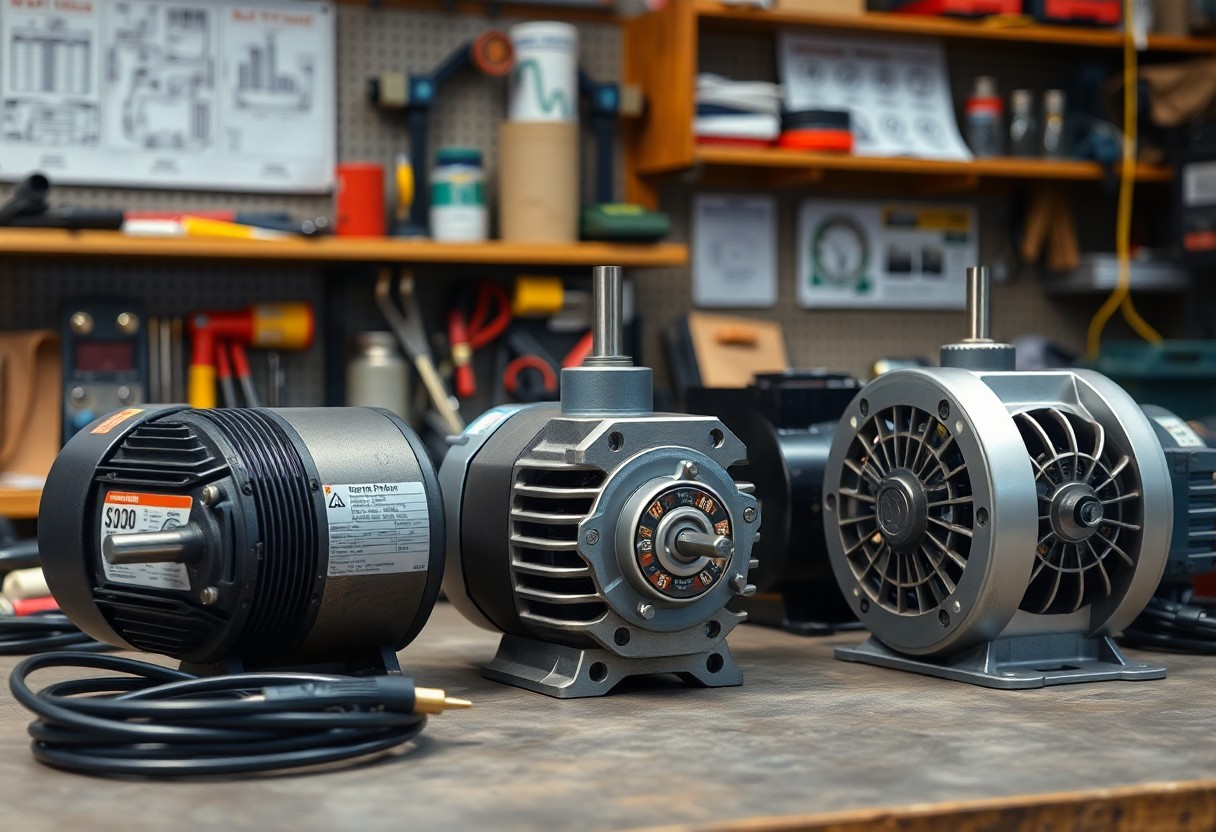
Many industries rely on electromotors for efficient operation and functionality, making it necessary for you to understand the common types and their diverse applications. From small appliances to large industrial machines, knowing the right motor for your specific needs can significantly impact performance and safety. This guide will explore various electromotor types, including their features and optimal uses, empowering you to make informed decisions for your projects.
Overview of Electromotor Types
Electromotors are categorized into various types, primarily based on their power supply and design characteristics. Understanding these classifications is vital for selecting the right motor for your application. The two main categories are AC (Alternating Current) and DC (Direct Current) motors, each serving distinct purposes and offering unique performance benefits.
| Type | Characteristics |
|---|---|
| AC Motors | Typically used in industrial applications, characterized by higher efficiency and lower maintenance. |
| DC Motors | Offers high torque and speed control, suitable for mobile equipment and electric vehicles. |
| Brushless Motors | Enhanced efficiency and lifespan due to the absence of brushes, commonly used in computer fans. |
| Stepper Motors | Designed for precise positioning, widely used in 3D printers and CNC machinery. |
| Synchronous Motors | Operates at a constant speed up to its rated load, often used in large industrial applications. |
Perceiving the nuances among these types can significantly enhance your application efficiency and selection process.
AC Motors
AC motors are renowned for their durability and low maintenance requirements. They operate on alternating current, which allows for constant power supply and efficient performance in larger applications. When considering this type, you’ll encounter induction motors and synchronous motors, each catering to different performance needs. For instance, induction motors are widely used in manufacturing due to their robustness and ability to handle varying loads, making them ideal for conveyor systems and compressors.
You might find that AC motors excel in environments where constant operation is vital. They offer higher efficiency rates and are often used in industrial settings, powering machinery and HVAC systems. The asynchronous nature of induction motors allows them to function well under fluctuating speed conditions. Your decision will largely depend on the specific application requirements, such as the need for continuous operation or versatility in speed adjustments.
DC Motors
DC motors are favored for their simplicity and ability to provide torque at low speeds. They primarily convert direct current electricity into mechanical power, making them suitable for applications requiring speed control or quick acceleration. Within the DC motor category, you have brushed and brushless types, where brushed DC motors are often more common due to their cost-effectiveness despite requiring more maintenance. Brushless motors, on the other hand, offer higher efficiency and a longer lifespan, which is advantageous in applications like drones and electric vehicles.
Another compelling feature of DC motors is their inherent capacity for precise speed regulation and torque adjustments. For applications such as robotic systems, electric scooters, and portable tools, you can leverage these motors to enhance functionality and user experience. This adaptability makes them ideal for situations where variable speed and starting torque are needed, sometimes becoming the motor of choice in your projects.
All things considered, DC motors provide significant versatility and efficiency, making them suitable for a wide range of applications-from industrial machines to household devices-primarily due to their customizable features and ease of control.
Common Applications of Electromotors
Industrial Uses
In industrial settings, electromotors are important for driving machines and equipment that perform various tasks. For instance, AC motors are widely utilized in manufacturing plants to operate conveyor belts, fans, and pumps due to their durability and efficiency. You may encounter DC motors in robotics and automation systems, where precision control is paramount. These motors enable applications ranging from assembly lines to material handling, where reliable performance can enhance productivity.
The power of electromotors in the industrial sector cannot be overstated. They account for approximately 60% of global electrical energy consumption, underlining their role in powering everything from small workshops to large scale manufacturing facilities. By incorporating variable frequency drives (VFDs), businesses can optimize energy use while ensuring machinery operates smoothly, ultimately leading to reduced operational costs.
Household Appliances
Electromotors are integral to a variety of household appliances that simplify daily tasks. From refrigerators and washing machines to vacuum cleaners and air conditioners, these devices rely heavily on different types of motors to function effectively. For instance, synchronous motors may found in washing machines allow for precise control during spinning cycles, enhancing cleaning efficiency.
Notably, brushless DC motors are increasingly favored in modern vacuum cleaners for their reduced noise and increased energy efficiency. They enable devices to maintain high suction power while minimizing power consumption. By utilizing smart technology, many appliances now optimize motor use based on real-time demand, further improving your home’s energy management.
Key Factors to Consider When Choosing an Electromotor
When opting for an electromotor, various factors can significantly affect your choice. Power requirements should be at the forefront of your considerations, as they dictate the motor’s capacity to meet your application needs. The required torque and operational speed directly correspond to the load the motor will encounter. Assess your machinery to determine whether the motor will be used for light, medium, or heavy-duty applications. Ensure to factor in the voltage and phase requirements that align with your power supply to avoid compatibility issues.
Another critical aspect is the efficiency of the motor. Efficiency ratings can impact operational costs, lifespan, and overall performance of the motor. You’ll want to prioritize high-efficiency models, typically rated in terms of their percentage of energy converted into usable output. By analyzing the motor’s service factor, alongside its design and load capacity, you can optimize its performance while minimizing energy waste. This ensures that your investment will yield returns through lower energy consumption and reduced operational costs.
Power Requirements
Understanding your specific power requirements plays a pivotal role in selecting the right electromotor for your needs. You need to accurately gauge the total load and torque needed for your application, which will inform the motor capacity required. For example, in an assembly line application that demands high torque, an underpowered motor may lead to stalling or overheating, compromising productivity and safety. Conversely, over-specifying can result in unnecessary energy consumption and increased operating costs.
It’s also important to consider transient loads-these are temporary spikes in demand that may require the motor to handle conditions beyond its standard load. For instance, a motor operating a conveyor system may need a higher starting torque to overcome inertia when starting or restarting. Ensuring your electromotor is rated adequately for both steady-state and peak loads is fundamental to achieving reliable operation and longevity.
Efficiency Ratings
Efficiency ratings indicate how effectively an electromotor converts electrical energy into mechanical energy. Choosing a motor with a high efficiency rating can drastically affect your overall energy bills. Generally, efficiency is expressed as a percentage, with higher percentages representing less energy lost as heat. For instance, a motor with an efficiency of 95% will waste only 5% of the input energy, which can translate to significant savings over time. Some manufacturers provide energy efficiency classes, such as IE3 or IE4, which classify motors based on their efficiency in relation to IEC standards.
High-efficiency motors are designed with advanced technology, including improved materials and optimized designs that minimize losses. This can lead to notable performance enhancements, especially in continuous operation scenarios. By investing in efficient motor technologies, you can ensure lower operational costs, reduced greenhouse gas emissions, and compliance with evolving regulatory standards. This investment can often pay off through reduced energy costs while also contributing positively to your company’s sustainability profile.
Pros and Cons of Different Electromotor Types
Pros and Cons of Different Electromotor Types
| Pros | Cons |
|---|---|
| High efficiency in energy conversion | Potential overheating issues |
| Low maintenance requirements | Higher initial costs for some types |
| Wide range of power options available | Noise generation in certain models |
| Compact design for limited spaces | Limited power capacity in smaller models |
| Environmentally friendly operation | Dependency on electrical supply quality |
Advantages
Electromotors offer significant benefits, particularly in terms of energy efficiency and reliability. Many modern designs achieve efficiencies exceeding 90%, which can result in substantial energy savings over time. This high efficiency is particularly advantageous in industrial applications where motors run continuously, allowing you to reduce operational costs significantly.
Another advantage lies in their maintenance ease. Most electromotors are designed with fewer moving parts compared to their mechanical counterparts, which translates to lower maintenance needs and reduced downtime. This can improve productivity in your operations, making them a wise investment for various applications.
Disadvantages
Despite their advantages, electromotors also come with distinct disadvantages. One of the primary concerns is the initial cost of high-efficiency models, which can be substantially higher than traditional motors. While these costs may be offset by energy savings in the long run, the upfront investment can pose a barrier for smaller businesses or projects with tight budgets.
Another significant drawback is the dependency on electricity, which can be problematic in areas with unreliable power supply. Fluctuations in voltage can lead to performance issues and potential damage to the motor. Additionally, some types may generate undesirable noise or vibrations during operation, which can affect the working environment, particularly in residential settings.
Selecting an Electromotor: A Step-by-Step Guide
Assessing Needs
| Factors to Consider | Description |
| Application Type | Define the specific application for which you need the motor, such as pumps, fans, or conveyors. Each application will have distinct requirements. |
| Power Requirements | Calculate the total power needed for your system. More demanding applications may require motors with ratings above 10 HP. |
| Environment | Evaluate environmental factors such as temperature, humidity, and potential exposure to chemicals, which can affect motor performance and longevity. |
| Speed and Torque | Determine the necessary speed (RPM) and torque. Depending on your needs, you may favor a specific motor type like AC or DC. |
Understanding your application’s requirements is the first step toward making an informed decision about which electromotor to select. Each use case demands attention to the unique performance characteristics of the motor, including speed, torque, and duty cycle. For example, if you’re powering an assembly line conveyor, your motor must ensure consistent speed and reliable torque delivery to maintain product flow. Being thorough in this initial assessment will guide you toward selecting the right type of electromotor.
Making Informed Choices
The choice of an electromotor goes beyond just its specifications; it involves evaluating energy efficiency, cost, and maintenance requirements. High-efficiency motors, while potentially more expensive initially, can lead to substantial savings in energy costs over time. When assessing different models, consider the energy rating and compliance with local regulations, which often encourage the use of more efficient options.
Take the time to analyze various brands and models, focusing on longevity, warranty coverage, and customer reviews. It’s beneficial to consult with industry professionals or suppliers who can provide insights on the most effective solutions for your operations. A well-informed choice can enhance not only productivity but also the overall sustainability of your operations.
Evaluating the total cost of ownership (TCO) is vital in this process. In addition to upfront costs, factor in energy consumption, potential downtime, and the cost associated with maintenance and repairs. This approach ensures that you are choosing an electromotor that not only fits your initial budget but also serves your long-term operational goals effectively.
Tips for Maintaining Electromotors
Regular Maintenance Practices
To ensure optimal performance and longevity of your electromotor, implementing regular maintenance practices is vital. Cleaning the motor’s exterior and ensuring that the ventilation is unobstructed can significantly reduce the risk of overheating. It’s advisable to check for any signs of wear, such as frayed wires or loose connections, which could lead to catastrophic failure if left unaddressed. Additionally, lubricating bearings and checking alignment can help prevent unnecessary strain on the motor.
Scheduling routine inspections is key; ideally, perform these checks every three to six months, depending on usage. A well-maintained electromotor operates at peak efficiency, which can translate into energy savings. Utilize diagnostic tools to monitor performance metrics like temperature and vibration patterns to preemptively catch issues. Any lack of attention to these details may result in costly downtime.
Troubleshooting Common Issues
Various operational problems can arise with your electromotor, and knowing how to troubleshoot them is vital. If you notice unusual noises, such as grinding or squeaking, it may indicate a need for lubrication or a possible bearing failure. Flickering or inconsistent power could suggest electrical issues, including faulty wiring or poor connections. Identifying these issues early can prevent significant damage and maintain functionality.
Another common challenge is overheating, often rooted in inadequate ventilation or overloaded circuits. Be vigilant about temperature readings and airflow; these factors are vital to maintaining your electromotor’s health. Additionally, you should always check for signs of electrical shortages or circuit overloads when performing diagnostics. Any signs of trouble should prompt immediate attention to avoid escalation.
Final Words
On the whole, understanding the various types of electromotors and their applications equips you with the knowledge necessary to make informed decisions for your projects and systems. Whether you are opting for an AC motor for its efficiency in industrial settings or a DC motor for precise speed control in robotics, each type comes with distinct advantages that cater to specific needs. Your application will dictate the right choice, determining factors like torque, speed, and power supply compatibility.
Your insights into electromotors can enhance the efficiency and functionality of your systems. By recognizing the strengths of different motor types, you can effectively align them with your requirements, ensuring optimal performance and longevity. Ultimately, leveraging this information can lead to improved outcomes in various fields, from manufacturing to automation, enhancing your overall expertise in the application of electromotors.

Comments are closed